Article: The Bean Bag and Flip-Flop Principle: What most leaders miss about high performance
4 October 2025
The Stakes: Get Systems Design Wrong and You Have Chaos, Get It Right and They’ll Beat Down the Door to Join You
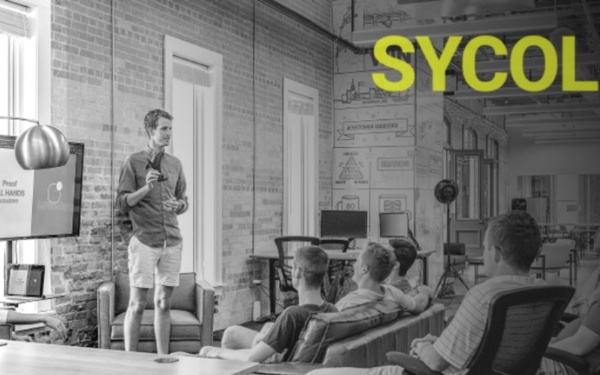
Walking through the offices of a major tech company, I was struck by what I saw: people working on beanbags in shorts and flip-flops. It hit home.
Maybe it’s not what the layperson would expect to see inside a highly respected, highly profitable and high-performing organisation.
Compared to more traditional corporate environments, it represented a more relaxed environment and a shift in traditional definitions.
Then the VP ushering us to the boardroom turned to us and said: “Don’t be fooled. It might look laid-back, but we’ve built it that way.”
In that moment I realised the power of culture design – to achieve their vision of such a laid-back looking environment and working conditions took highly skilled systems design, social architecture, discipline and confident management. This was high performance.
The Hidden Challenge: Alignment and Autonomy
This blog isn’t so much about the environment per se, but the design of systems, leadership and management that enable what we call at SYCOL “alignment and autonomy” – where people are singing from the same hymn sheet yet free to express themselves, contribute creatively, and bring their full capability to work.
This is the balance that’s challenging to achieve – but can be accomplished with expert design.
Get it wrong and you have a laissez-faire workforce drifting without direction.
Get it right and they’ll be beating down the door to work in your organisation.
The Psychology of Liberating Systems
What looked like casual freedom was actually sophisticated behavioural architecture. The beanbags weren’t just comfortable furniture – they were positioned to encourage specific types of collaboration. The casual dress code wasn’t about comfort – it was about reducing hierarchy barriers that might inhibit rapid feedback and iteration.
Every aspect had been deliberately designed to enable the behaviours that drove their performance goals while maintaining the freedom people needed to innovate.
Traditional approaches often create systems that feel constraining:
- Complex processes that slow decision-making
- Rigid structures that inhibit collaboration
- Formal hierarchies that create communication barriers
- Standardisation that suppresses creativity
But well-designed systems create both alignment and autonomy:
- Clear frameworks that speed decision-making whilst allowing flexibility
- Structures that enable collaboration without forcing it
- Accessible leadership that encourages diverse perspectives
- Standards that create space for innovation within defined parameters
The Design Principles: Building Alignment with Autonomy
The key insight was how they’d solved a fundamental design challenge: creating systems that feel empowering whilst achieving systematic performance alignment.
- Purpose-Driven Design: Every system element served a specific performance goal. The informality wasn’t cosmetic – it removed barriers to the behaviours they needed whilst maintaining clear direction.
- Psychology-Led Architecture: They understood their workforce performed best when systems felt enabling rather than controlling – but this required disciplined design, not hope.
- Clear Boundaries Within Freedom: The informal surface had very clear boundaries. People knew exactly what was expected, how performance was measured, and what success looked like – which paradoxically enabled more freedom within those parameters.
- Systematic Measurement: Despite the casual appearance, they had sophisticated metrics tracking collaboration, innovation rates, project delivery, and team effectiveness.
Building Systems That Enable Alignment and Autonomy
In our Build-Embed-Sustain™ methodology, we call this “enabling systems design.” The goal is creating organisational infrastructure that achieves both:
Alignment – Everyone moving in the same direction toward shared goals, and
Autonomy – Freedom to contribute, innovate, and express within that direction
- Phase 1: Build – Design systems based on your culture vision and performance requirements
- Phase 2: Embed – Integrate these systems so they feel natural, not imposed
- Phase 3: Sustain – Maintain through feedback and continuous improvement
The Performance Impact
This tech company’s disciplined approach to creating “controlled freedom” delivered:
- Faster product development cycles
- Higher employee engagement and retention
- Increased cross-team collaboration whilst maintaining direction
- More rapid problem-solving and innovation
- Stronger performance consistency across teams
Most importantly, their people actively participated in maintaining and improving the systems because they experienced them as helpful rather than burdensome.
The Question for Your Organisation
Have you achieved the balance between alignment and autonomy?
If your team sees processes and standards as barriers to freedom, you’ve over-indexed on alignment. If people are unclear about direction and expectations, you’ve over-indexed on autonomy.
The goal is the sweet spot: where people are aligned to organisational goals whilst feeling free to contribute their best thinking and creativity.
Get This Wrong: Laissez-Faire Chaos Get This Right: People Beating Down Your Door
The most successful organisations we work with understand that creating this balance requires expert systems design. It’s not about being “nice” or “relaxed” – it’s about sophisticated behavioural architecture that enables both direction and freedom.
At SYCOL, we’ve learned that the best systems look simple on the surface but are meticulously designed underneath. Like that tech company’s beanbags and flip-flops – casual on the surface, systematically aligned and autonomous beneath.
The organisations that master this don’t just retain talent – they become talent magnets. Because people want to work where they have both clarity and freedom.
Want to transform your leadership with psychology-led insights?
Sign-up for Stakes & Solutions - monthly insights for CEOs and CHROs facing pressing culture and leadership decisions.
Dr Ioan Rees
Ioan is a Chartered Psychologist and founder of SYCOL, the psychology-led consultancy that works in stakes, not sectors. Leaders call him in two situations: when culture and leadership issues are undermining major change programmes, or when they need high-performance infrastructure for ambitious growth. He’s spent over 15 years helping CEOs and executive teams build the culture and leadership systems that make strategy succeed, especially under pressure. Known for his direct approach and blend of science and pragmatism, Ioan created the Build–Embed–Sustain™ methodology after working with organisations across tech, media, finance, and public service. He also contributes regularly to national television as a psychology expert.